Serving Roanoke & the Roanoke Valley
Foundation Repair in Roanoke, VA
Cracks in the basement wall, doors that stick, a floor that slopes, or water coming in after every storm. Foundation problems don't fix themselves, and they usually cost more the longer they wait. We connect Roanoke Valley homeowners with local foundation pros who can tell you what's going on and what it takes to fix it.
- Free on-site inspection
- Local Roanoke Valley pros
- Fast callbacks, often same day
Foundation repair stabilizes a home's foundation and fixes the damage: sealing cracks, bracing or anchoring bowing walls, installing piers under settling footings, and controlling water. The right fix depends on the cause. Call or send the form and we'll connect you with a local Roanoke foundation pro for a free inspection and estimate.
Experiencing any of these problems?
Pick the problem you're seeing. Every service below is handled by an independent local contractor we connect you with.
Foundation Repair
Diagnosis and repair of settling, sinking and cracked foundations.
Learn moreFoundation Crack Repair
Epoxy and polyurethane crack injection, and stair-step block crack repair.
Learn moreBowing Basement Wall Repair
Wall anchors, steel or carbon-fiber bracing for leaning and bowing walls.
Learn morePier Installation & Underpinning
Push piers and helical piers to stabilize and lift settling foundations.
Learn moreCrawl Space Repair & Encapsulation
Sagging floor supports, moisture control, vapor barriers and encapsulation.
Learn moreBasement Waterproofing
Interior drains, sump pumps and exterior grading for wet basements.
Learn more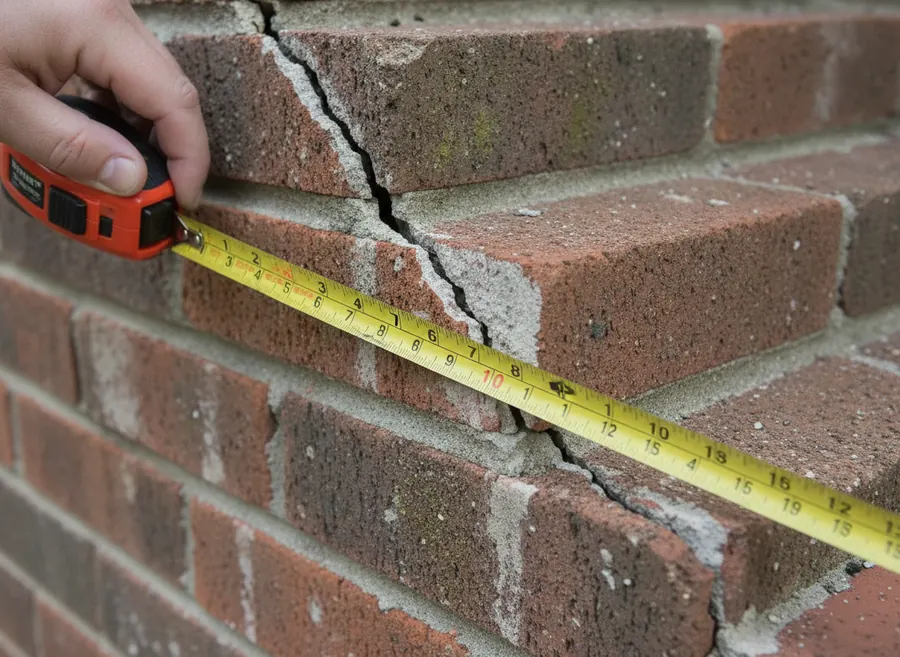
Foundation repair for Roanoke Valley homes
Most foundation problems come down to soil and water. When the soil under a footing gets softer, washes out, or shrinks and swells with wet and dry seasons, part of the house can sink. That shows up as stair-step cracks in block walls, cracks over windows and doors, sloping floors, and doors or windows that stick. On the walls, pressure from wet soil outside can push block basement walls inward.
A good foundation contractor starts by finding the cause, not just the crack. They'll measure floor levels, look at crack patterns, check gutters, downspouts and grading, and look for signs of water. Then they'll recommend a fix: piers for settling, anchors or braces for bowing walls, crack repair for minor movement, and drainage work where water is the driver. Some situations call for a structural engineer's report first, especially during a home sale or for serious movement.
- Diagnosis of the cause, not just the symptom
- Floor elevation and crack measurements
- Repair plan matched to the problem
- Water and drainage addressed alongside structure
- Engineer involvement when needed
Foundation crack repair
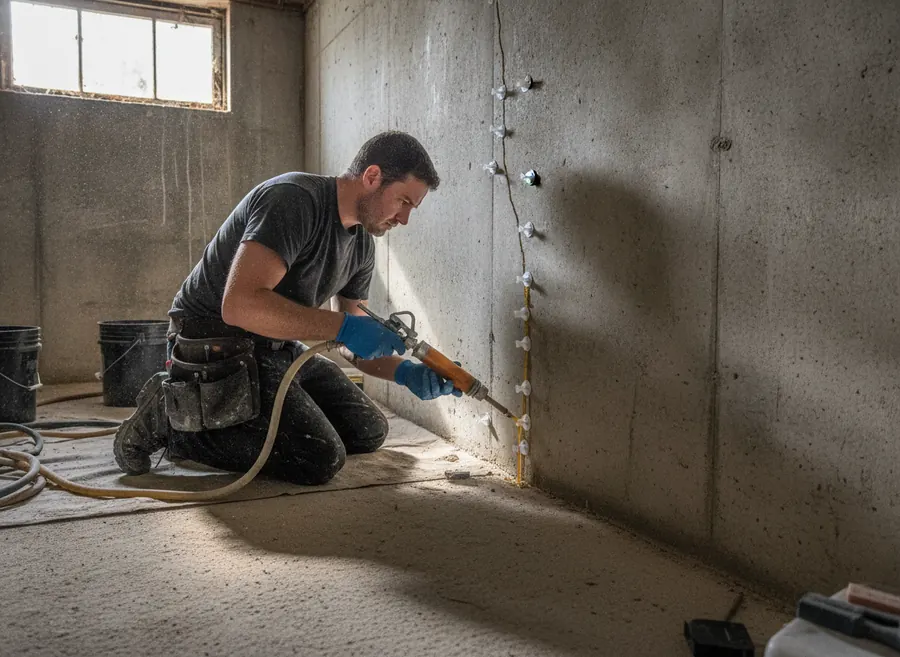
Not every crack is a structural emergency. Thin vertical cracks in poured concrete walls are common from shrinkage as concrete cures. They matter mostly if they leak. Those are usually fixed by injecting epoxy, which bonds the concrete back together, or polyurethane foam, which expands to seal out water.
Other cracks deserve a closer look: horizontal cracks in block walls, stair-step cracks that are getting wider, cracks wider than about a quarter inch, or cracks where one side has shifted past the other. Those can mean the wall is moving, and sealing them without stopping the movement just hides the problem. A pro can tell which kind you have.
- Epoxy injection for structural bonding
- Polyurethane injection to stop leaks
- Assessment of horizontal and stair-step cracks
- Monitoring suggestions for minor cracks
Bowing and leaning basement walls
Block basement walls are strong when pushed straight down but weak when pushed from the side. Wet, heavy clay soil and frost can press against them until they crack horizontally and bow inward. Left alone, a bowing wall can keep moving.
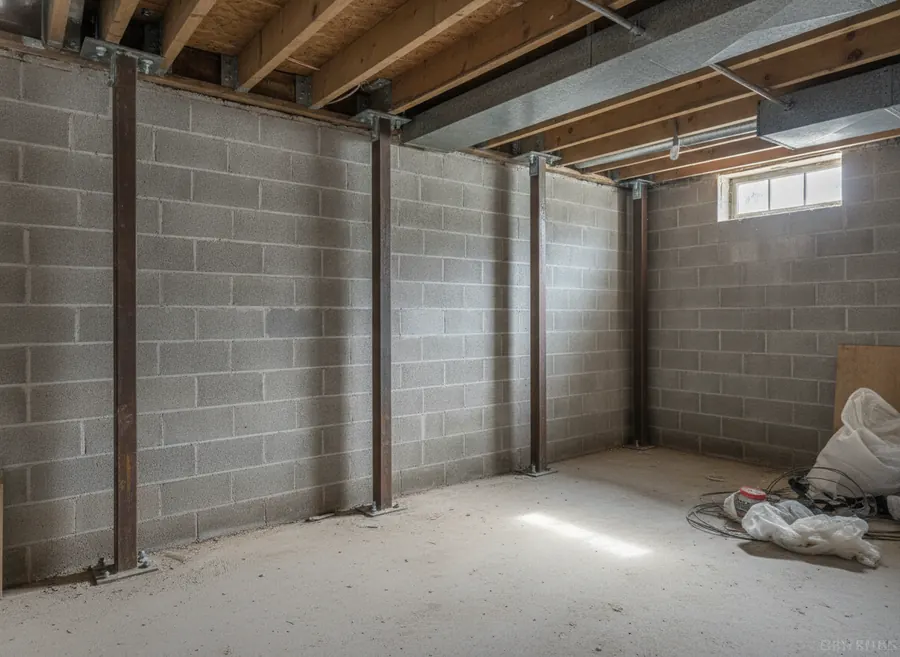
Common fixes are wall anchors, which are steel plates inside connected by rods to anchors buried in the yard; steel I-beam braces bolted to the floor and the floor framing; and carbon-fiber straps bonded to the wall for walls with limited movement. Severely displaced walls may need excavation and rebuilding. The right choice depends on how far the wall has moved, what's outside the wall, and your budget.
- Wall anchors for walls that can be tightened back over time
- Steel braces where yard access is limited
- Carbon fiber for minor bowing
- Rebuild options for severe movement
Piers and underpinning for settling foundations
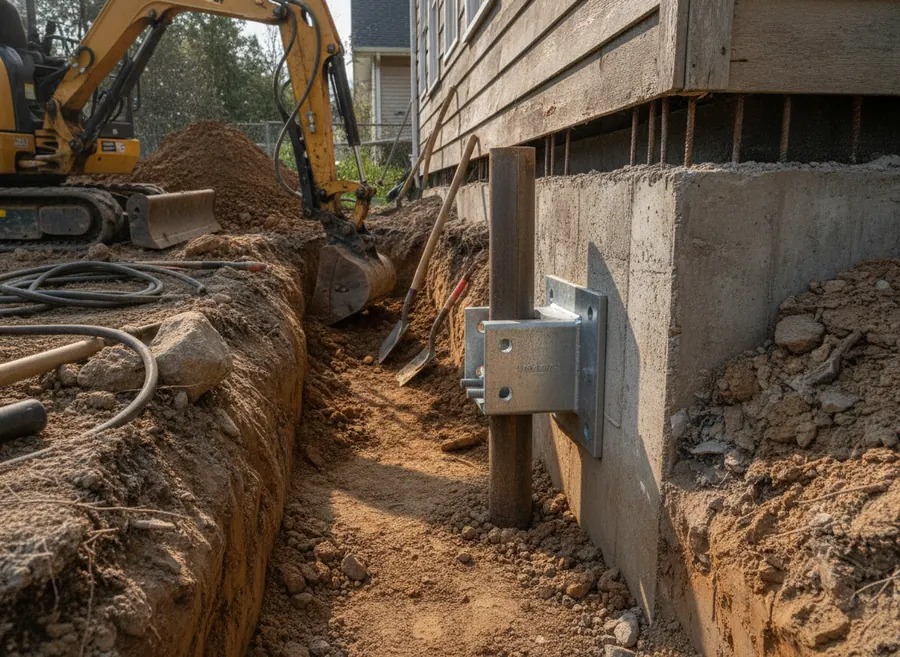
When part of a house is sinking, the usual fix is to transfer the weight to firmer soil or rock below. Push piers are steel pipes driven down under the footing until they hit load-bearing strata, using the weight of the house as resistance. Helical piers have screw-like plates and are turned into the ground, which works well for lighter structures and porches.
Once piers are set, the contractor can stabilize the foundation and sometimes lift it partway back toward level. Lifting is done carefully, because moving a house can open new cracks in drywall or tile. Ask what results to expect and what the warranty covers.
- Push piers for heavier loads
- Helical piers for lighter structures
- Stabilization with possible partial lift
- Installed from outside or inside depending on access
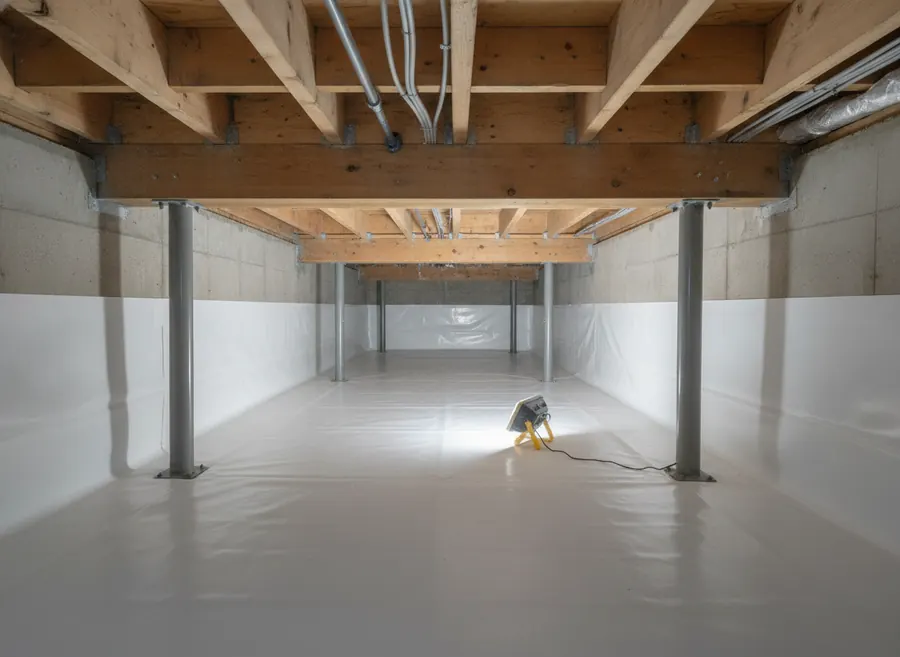
Crawl space repair and encapsulation
Many Roanoke-area homes sit over crawl spaces, and humid summers make them a magnet for moisture. Damp crawl spaces lead to musty smells, sagging floors, rotted joists, mold, and pests. Repairs range from adding support jacks under sagging beams to replacing damaged wood.
Encapsulation seals the crawl space with a heavy vapor barrier on the floor and walls, closes the vents, and controls humidity with a dehumidifier or conditioned air. It keeps the space dry, protects the framing, and often makes the floors above more comfortable. If water actually pools in the crawl space, drainage and a sump may be needed first.
- Support posts and jacks for sagging floors
- Joist and sill repair
- Vapor barrier and sealed vents
- Dehumidifier and drainage options
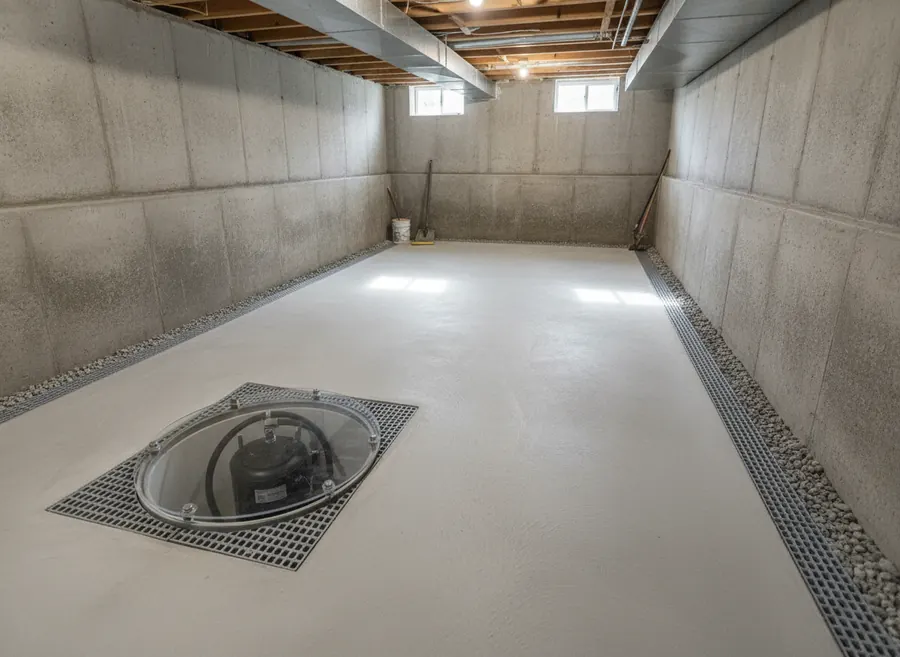
Basement waterproofing
Water and foundation problems go hand in hand. Wet soil pushes on walls, washes out under footings, and leaks through cracks. In the Roanoke Valley's hilly neighborhoods, many homes are built into slopes where rainwater runs straight toward the foundation.
Waterproofing starts outside with gutters, downspout extensions and grading that move water away from the house. Inside, an interior drain system along the footing collects water and sends it to a sump pump. Cracks get sealed, and a dehumidifier handles the leftover humidity. Exterior excavation and membrane work is the most thorough option but also the most disruptive.
- Gutter, downspout and grading fixes
- Interior perimeter drains and sump pumps
- Crack sealing
- Exterior waterproofing when needed
Signs you should get a foundation inspection
- Stair-step or horizontal cracks in block walls
- Cracks wider than about 1/4 inch or getting wider
- Basement walls leaning or bowing inward
- Doors and windows that stick or won't latch
- Sloping or bouncy floors
- Gaps between walls and ceilings or around window frames
- Water in the basement or crawl space after rain
- Musty smells or sagging floors above a crawl space
How much does foundation repair cost in Roanoke?
Costs vary more than almost any home repair, because the fix depends on what's causing the problem and how far it has gone. These are broad typical ranges:
| Job | Typical range |
|---|---|
| Crack injection (per crack) | $400 to $1,000 |
| Bowing wall repair (anchors, braces or carbon fiber) | $4,000 to $15,000 |
| Piers (per pier) | $1,200 to $3,000 |
| Typical pier job (several piers) | $6,000 to $20,000+ |
| Crawl space encapsulation | $5,000 to $15,000 |
| Interior drain and sump system | $4,000 to $12,000 |
These ranges are general, not quotes. The real price comes from an on-site inspection by the local provider.
Why foundations move in Roanoke: the local facts
Foundation problems in the Roanoke Valley are often tied to the ground itself and to the amount of rain the area gets. These facts come from the U.S. Geological Survey, NOAA climate data and local reporting.
Parts of the Roanoke Valley sit on karst, carbonate bedrock that slowly dissolves underground. The U.S. Geological Survey notes that residual soil that plugs sinkholes can collapse and cause considerable destruction to homes.
Source: U.S. Geological Survey, Geologic Aspects of Karst in the AppalachiansIn December 2025 a sinkhole about 15 feet deep and 10 feet across opened at Link Street and Maplelawn Avenue NE in Roanoke. Officials said the collapse appeared to be the result of karst conditions.
Source: WSLS 10 News, Dec 12, 2025Roanoke averages about 42.8 inches of precipitation a year, with measurable precipitation on about 121 days (1991–2020 NOAA climate normals). Water that soaks clay soil next to a foundation is a common cause of cracks, bowing walls and wet basements.
Source: Current Results, from NOAA 1991–2020 climate normalsRoanoke County publishes a karst map layer that shows mapped sinkholes and karst areas. The state notes that many more sinkholes exist than are mapped, so the map is a general guide, not an answer for a specific house.
Source: Roanoke County GIS, Environmental data
How it works
- 1
Call or send the form.
Tell us what you're seeing and where the house is.
- 2
We connect you with a local foundation pro.
A partner contractor who works your part of the valley reaches out to schedule an inspection.
- 3
Inspection and plan.
They measure, find the cause and explain your options with prices.
- 4
Repair.
Most crack and wall jobs take a day or a few days; pier and waterproofing jobs can take longer.
- 5
Follow-up.
Ask for the warranty in writing and any monitoring the contractor recommends.
Why foundations move in the Roanoke Valley
The Roanoke Valley sits in the Blue Ridge and Valley and Ridge region, with steep lots, clay-heavy soils and plenty of rain. Clay swells when wet and shrinks when dry, so footings can move with the seasons. Homes built into hillsides get extra water pressure on their uphill walls, and older block basements in Roanoke, Salem and Vinton are especially prone to bowing and stair-step cracks.
Parts of the region also sit on limestone, where water can carve out voids underground over time. Add older drainage, gutters that overflow, and downspouts dumping right next to the house, and it's easy to see why foundation and water problems are common here. The good news: most issues can be stabilized when caught early.
Areas we serve
We connect homeowners across the Roanoke Valley with local pros.
Frequently asked questions
Are foundation cracks normal?
Small vertical hairline cracks in poured concrete are common and often harmless unless they leak. Horizontal cracks, stair-step cracks in block, wide cracks, or cracks that keep growing should be looked at by a pro.
How do I know if my foundation problem is serious?
Warning signs include walls bowing inward, cracks wider than about a quarter inch, cracks with one side offset, doors and windows sticking across the house, and floors that slope noticeably. Any of these deserve an inspection.
Do I need a structural engineer?
For straightforward repairs, many homeowners work directly with a foundation contractor. For serious movement, a home sale, or when you want an independent opinion, a structural engineer's report is a good investment.
How long does foundation repair take?
Crack injections often take a few hours. Wall bracing and anchors usually take one to three days. Pier jobs and waterproofing systems can take several days depending on size.
Will foundation repair fix my sticking doors?
Stabilizing or lifting the foundation often improves sticking doors and windows, but some may still need adjusting afterward.
Does homeowners insurance cover foundation repair?
Usually not for settling, soil movement or general wear. Coverage is more likely for sudden events. Check your policy and talk to your agent.
Can I sell a house with foundation problems?
Yes, but buyers and lenders will want to know. Many sellers get an inspection and repair with a transferable warranty, which makes the sale smoother.
Is your service free?
Yes. We're a free referral service. We connect you with an independent local foundation contractor, who inspects, quotes and does the work. You decide whether to hire them.
Ready for a free estimate?
Tell us what's going on and we'll connect you with a local foundation repair pro.